180 Graphics Cards benchmarked: Test #1 - 3DMark Fire Strike
In this article
3DMark Fire Strike
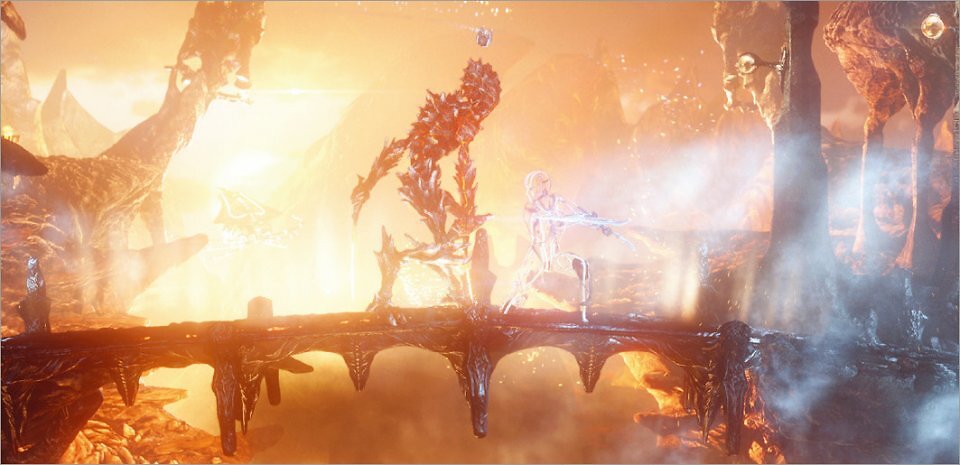
We kick off the benchmarking session with the only synthetic benchmark in the lineup: 3DMark. We chose its "Fire Strike" test because it marks the entry point into the DirectX 11 world, runs at Full HD (1080p), and is moderately demanding by today's standards—perfect for the older participants, such as the AMD/ATI Radeon HD 5870, Nvidia Geforce GTX 480, and their smaller siblings.
 Source: PCGH
3DMark Fire Strike
Source: PCGH
3DMark Fire Strike
Despite its age and low detail density, 3DMark Fire Strike scales exceptionally well with graphics performance—at least with a potent CPU like our 14900KS @ 6.2 GHz. The ratio between the slowest graphics card (Radeon HD 5450) and the fastest (Geforce RTX 5090) is 304. This actually quite impressive result seems meager when you consider that the theoretical raw performance is more than three times higher than the actual result. The venerable Radeon HD 5870 narrows the gap to the Geforce RTX 5090 to just a factor of 26. The situation is similar with the GTX 480. The latter celebrated its 15th anniversary in March 2025 and manages to outperform the HD 5870 by 13 percent—even though its raw computing power is only half as high. The Geforce RTX 5090 is the first gaming graphics card to break the 100 TFLOPS barrier and should therefore be vastly faster. But it isn't; the GTX 480 is "only" outperformed by a factor of 23. That's just how it is—old applications don't scale linearly with new computing powerhouses, since the workload prioritizes different aspects. This prepares you for the game tests on the following pages.