Intel veröffentlicht Spezifikationen von 28 Ivy-Bridge-CPUs
Ob gewollt oder nicht: Intel hat die offiziellen Spezifikationen von 28 Ivy-Bridge-CPUs für den Desktop und Notebooks veröffentlicht. Diese beinhalten jedoch nur die Core i7- und Core i5-Modelle, die Dualcores in Form der Core i3 folgen ohnehin erst im Juni.
Satte 28 Core i7- und Core i5-Modelle Desktop sowie Notebooks umfasst das Lineup der kommenden Ivy-Bridge-DT-Chips, die Intel Ende April für den Sockel 1155 in den Handel schicken wird. Die Auflistung bestätigt praktisch alle bisherigen Gerüchte und Leaks, darunter die Taktraten, die Grafikeinheiten, die Cache-Ausstattung, die TPD und vieles mehr. Im mobilen Segment bestätigt Intel das Lineup ebenfalls, spannend sind hier vor allem die ULV-Versionen mit einer TDP von 17 Watt für Utrabooks.
Nachfolgend die komplette Desktop-Modellpalette inklusive den im PDF nicht aufgeführten Core i3-Modellen sowie die mobilen Chips samt den ULV-Versionen:
| Modell | Kerne | Basistakt | Turbo | L3-Cache | Grafikeinheit | GPU-Takt (Turbo) | TDP |
|---|---|---|---|---|---|---|---|
| Core i7-3770K | 4 + SMT | 3,5 GHz | 3,9 GHz | 8 MiByte | HD 4000 | 650 bis 1.150 MHz | 77 Watt |
| Core i7-3770 | 4 + SMT | 3,4 GHz | 3,9 GHz | 8 MiByte | HD 4000 | 650 bis 1.150 MHz | 77 Watt |
| Core i7-3770S | 4 + SMT | 3,1 GHz | 3,9 GHz | 8 MiByte | HD 4000 | 650 bis 1.150 MHz | 65 Watt |
| Core i7-3770T | 4 + SMT | 2,5 GHz | 3,7 GHz | 8 MiByte | HD 4000 | 650 bis 1.150 MHz | 45 Watt |
| Core i5-3570K | 4 | 3,4 GHz | 3,8 GHz | 6 MiByte | HD 4000 | 650 bis 1.150 MHz | 77 Watt |
| Core i5-3570 | 4 | 3,4 GHz | 3,8 GHz | 6 MiByte | HD 2500 | 650 bis 1.150 MHz | 77 Watt |
| Core i5-3570S | 4 | 3,1 GHz | 3,8 GHz | 6 MiByte | HD 2500 | 650 bis 1.150 MHz | 65 Watt |
| Core i5-3570T | 4 | 2,3 GHz | 3,3 GHz | 6 MiByte | HD 2500 | 650 bis 1.150 MHz | 45 Watt |
| Core i5-3550 | 4 | 3,3 GHz | 3,7 GHz | 6 MiByte | HD 2500 | 650 bis 1.150 MHz | 77 Watt |
| Core i5-3550S | 4 | 3,0 GHz | 3,7 GHz | 6 MiByte | HD 2500 | 650 bis 1.150 MHz | 65 Watt |
| Core i5-3475S | 4 | 2,9 GHz | 3,6 GHz | 6 MiByte | HD 4000 | 650 bis 1.100 MHz | 65 Watt |
| Core i5-3470 | 4 | 3,2 GHz | 3,6 GHz | 6 MiByte | HD 2500 | 650 bis 1.100 MHz | 77 Watt |
| Core i5-3470S | 4 | 2,9 GHz | 3,6 GHz | 6 MiByte | HD 2500 | 650 bis 1.100 MHz | 65 Watt |
| Core i5-3470T | 2 + SMT | 2,9 GHz | 3,6 GHz | 3 MiByte | HD 2500 | 650 bis 1.100 MHz | 35 Watt |
| Core i5-3450 | 4 | 3,1 GHz | 3,5 GHz | 6 MiByte | HD 2500 | 650 bis 1.100 MHz | 77 Watt |
| Core i5-3450S | 4 | 2,8 GHz | 3,5 GHz | 6 MiByte | HD 2500 | 650 bis 1.100 MHz | 65 Watt |
| Core i5-3330 | 4 | 3,0 GHz | 3,2 GHz | 6 MiByte | HD 2500 | 650 bis 1.050 MHz | 77 Watt |
| Core i5-3330S | 4 | 2,7 GHz | 3,2 GHz | 6 MiByte | HD 2500 | 650 bis 1.050 MHz | 65 Watt |
| Core i3-3240 | 2 + SMT | 3,4 GHz | - | 3 MiByte | HD 2500 | 650 bis 1.050 MHz | 55 Watt |
| Core i3-3240T | 2 + SMT | 3,0 GHz | - | 3 MiByte | HD 2500 | 650 bis 1.050 MHz | 35 Watt |
| Core i3-3225 | 2 + SMT | 3,3 GHz | - | 3 MiByte | HD 4000 | 650 bis 1.050 MHz | 55 Watt |
| Core i3-3220 | 2 + SMT | 3,3 GHz | - | 3 MiByte | HD 2500 | 650 bis 1.050 MHz | 55 Watt |
| Core i3-3220T | 2 + SMT | 2,8 GHz | - | 3 MiByte | HD 2500 | 650 bis 1.050 MHz | 35 Watt |
| Modell | Kerne | Basistakt | Turbo | L3-Cache | Grafikeinheit | GPU-Takt (Turbo) | TDP |
|---|---|---|---|---|---|---|---|
| Core i7-3920XM | 4 + SMT | 2,9 GHz | 3,8 GHz | 8 MiByte | HD 4000 | 650 bis 1.300 MHz | 55 Watt |
| Core i7-3820QM | 4 + SMT | 2,7 GHz | 3,7 GHz | 8 MiByte | HD 4000 | 650 bis 1.250 MHz | 45 Watt |
| Core i7-3720QM | 4 + SMT | 2,6 GHz | 3,6 GHz | 6 MiByte | HD 4000 | 650 bis 1.250 MHz | 45 Watt |
| Core i7-3667U | 2 + SMT | 2,0 GHz | 3,2 GHz | 4 MiByte | HD 4000 | 350 bis 1.250 MHz | 17 Watt |
| Core i7-3615QM | 2 + SMT | 2,3 GHz | 3,3 GHz | 6 MiByte | HD 4000 | 650 bis 1.250 MHz | 35 Watt |
| Core i7-3612QM | 4 + SMT | 2,1 GHz | 3,1 GHz | 6 MiByte | HD 4000 | 650 bis 1.250 MHz | 35 Watt |
| Core i7-3610QM | 4 + SMT | 2,3 GHz | 3,3 GHz | 6 MiByte | HD 4000 | 650 bis 1.250 MHz | 35 Watt |
| Core i7-3520M | 2 + SMT | 2,9 GHz | 3,6 GHz | 4 MiByte | HD 4000 | 650 bis 1.250 MHz | 35 Watt |
| Core i7-3517U | 2 + SMT | 3,0 GHz | - | 4 MiByte | HD 4000 | 350 bis 1.250 MHz | 17 Watt |
| Core i5-3427U | 2 + SMT | 1,8 GHz | 2,8 GHz | 3 MiByte | HD 4000 | 350 bis 1.250 MHz | 17 Watt |
| Core i5-3360M | 2 + SMT | 2,8 GHz | 3,5 GHz | 3 MiByte | HD 4000 | 650 bis 1.250 MHz | 35 Watt |
| Core i5-3320M | 2 + SMT | 2,6 GHz | 3,3 GHz | 3 MiByte | HD 4000 | 650 bis 1.250 MHz | 35 Watt |
| Core i5-3317U | 2 + SMT | 1,7 GHz | 2,6 GHz | 3 MiByte | HD 4000 | 350 bis 1.250 MHz | 17 Watt |
| Core i5-3310M | 2 + SMT | 2,5 GHz | 3,1 GHz | 3 MiByte | HD 4000 | 650 bis 1.250 MHz | 35 Watt |
Quelle: Intel
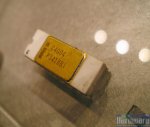
In der Galerie: 40 Jahre Mikroprozessoren von Intel: Eine spannende Zeitreise








Du hast bedacht, dass bei einem Laptop vor allem das Display sehr viel Strom frisst? Die aktuellen Intel-CPUs sind in 2D bei unter 5 Watt.
Kann man die "Anzeige" (mehr ist die Grafikeinheit eher nicht) des i7-3770K ausschalten/deaktivieren oder wird es den Prozessor auch ohne diesen Balast geben?
Ich bezweifle auch fast, dass die Verbrauchsangaben nicht stimmen. Wäre schön, wenn PCGH da mal nachmessen könnte.
Ich habe nämlich ein Dell Laptop mit i7-2760QM Prozessor, der eine TDP von 45W haben soll. Das kann aber niemals stimmen, da bei Volllast des Prozessors das Laptop ohne Grafiklast (nur 2D "Standbild") ca. 90W benötigt! Details zum Laptop in meinem Profil.
Hier hat Intel die Angaben wohl etwas "frisiert" ... Nichts destotrotz kann er auch sehr sparsam sein.
Ich blick da langsam net mehr durch xD
das Ordnungsprinzip von Intel hat irgendwie wenig sinn...
Core i7-3770 -> 77 Watt, finde ich sehr beeindruckend
führt wohl kein Weg an ivy vorbei
Ende des Jahres ist der Core i7-3770K mein, freu freu freu.
Und das mit nur 77W, richtig Öko und so.