AMD EXPO Ultra Low Latency Tested: Up to 14 Percent More Fps at the Push of a Button
At Computex 2026, AMD introduced EXPO 1.2 Ultra Low Latency, a new DDR5 profile for Ryzen 7000 and Ryzen 9000 processors on socket AM5. We put it to the test.
Special Add as a preferred source on Google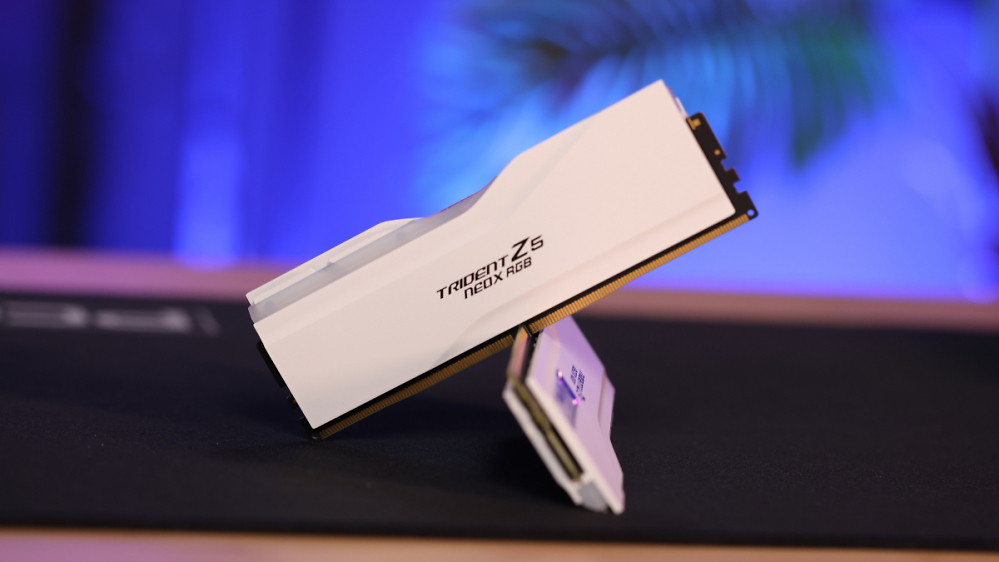
Inhaltsverzeichnis
AMD caused quite a stir at this year's Computex as part of the celebrations marking the tenth anniversary of socket AM4. The now-legendary Ryzen 7 5800X3D was reissued— our review can be found here —and AMD also announced an entirely new processor. The Ryzen 7 7700X3D is scheduled to launch on July 16, 2026, offering prospective Ryzen 7 7800X3D buyers a more affordable alternative. The Radeon RX 9070 GRE, which was also presented at Computex, impressed our colleague Raffael Vötter in testing. AMD then added one more announcement: a new EXPO technology called Ultra Low Latency, which is the focus of this article.
![[PLUS for the Reboot] Get the Most Out of the Ryzen 7 5800X3D: Tuning Guide, Optimized Subtimings, and RAM Scaling](/screenshots/1020x/2022/06/teaser_tuning-pcgh1.jpg)
[PLUS for the Reboot] Get the Most Out of the Ryzen 7 5800X3D: Tuning Guide, Optimized Subtimings, and RAM Scaling
The eight-core Ryzen 7 5800X3D for socket AM4 is becoming a firm favorite among PCGH readers. But how can you get the most out of this gaming powerhouse? A PCGH Plus guide comprising three individual articles.
mehr ...
AMD EXPO 1.2 Ultra Low Latency: What It Does
AMD introduced "Extended Profiles for Overclocking," or EXPO, at Computex 2022, initially for Ryzen 7000 processors. The original idea was to offer an alternative to Intel's XMP that was specifically optimized for Ryzen CPUs and could store additional, customized RAM timings in the overclocking profile.
Compared with XMP, EXPO can store 29 additional parameters. These primarily cover secondary and tertiary timings, which can have a measurable effect on performance. However, the initial promise soon gave way to disappointment. Practically every RAM kit offering both XMP and EXPO profiles simply reused its XMP timings for EXPO. To date, we have not encountered a Ryzen memory kit that makes meaningful use of the additional timing options.
 Source: AMD
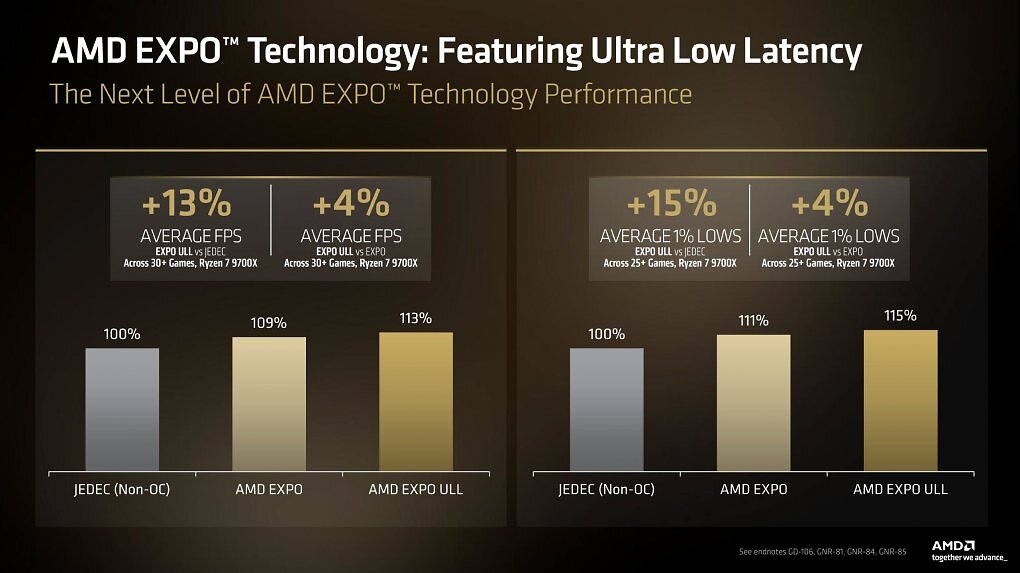
EXPO ULL takes a new approach. AMD claims up to 13 percent more fps over the JEDEC standard and four percent higher performance than conventional EXPO. According to AMD, the comparison used a DDR5-5600 CL40 kit for JEDEC and a DDR5-6000 CL28 kit for EXPO, while the specifications of the ULL kit were not disclosed. A four-percent increase in gaming performance would suggest that "only" the timings were changed. A higher memory clock would have produced a considerably larger gain.
Source: AMD
EXPO ULL takes a new approach. AMD claims up to 13 percent more fps over the JEDEC standard and four percent higher performance than conventional EXPO. According to AMD, the comparison used a DDR5-5600 CL40 kit for JEDEC and a DDR5-6000 CL28 kit for EXPO, while the specifications of the ULL kit were not disclosed. A four-percent increase in gaming performance would suggest that "only" the timings were changed. A higher memory clock would have produced a considerably larger gain.
Certified EXPO ULL kits were scheduled to arrive from leading memory manufacturers starting in June 2026, including G.Skill, Kingston, Klevv, Lexar, Team Group, V-Color, and Adata XPG.
EXPO ULL: System Requirements
Memory sold as EXPO Ultra Low Latency usually stores two profiles: a conventional EXPO profile and a ULL configuration. This ensures compatibility with other platforms, including systems with Intel processors. Using the improved ULL timings, however, requires a BIOS update containing AGESA 1.3.0.1b. This version is now available for all common motherboards from Asus, MSI, Asrock, and other manufacturers.
In response to our inquiry, G.Skill confirmed that ULL memory is primarily intended for use with non-X3D processors. The reason is straightforward: processors with 3D V-Cache are less dependent on system memory than their counterparts without the additional L3 cache. The new AGESA version also introduces additional RAM timings: tCCD_L, tCCDL_WR, and tCCDL_WR2. We will examine these in more detail in an upcoming memory-tuning article.
Two New G.Skill RAM Kits Compared
The Memory Kits in Detail
We would like to thank G.Skill for providing two EXPO ULL kits. Both operate at DDR5-6000, but use different memory ICs and therefore come with different factory timings. Each kit stores two EXPO profiles, one of which includes the timings optimized for ULL. To illustrate exactly what happens when an EXPO or EXPO ULL profile is loaded, we created a comparison using HWInfo. Its memory-only function displays all relevant memory parameters.
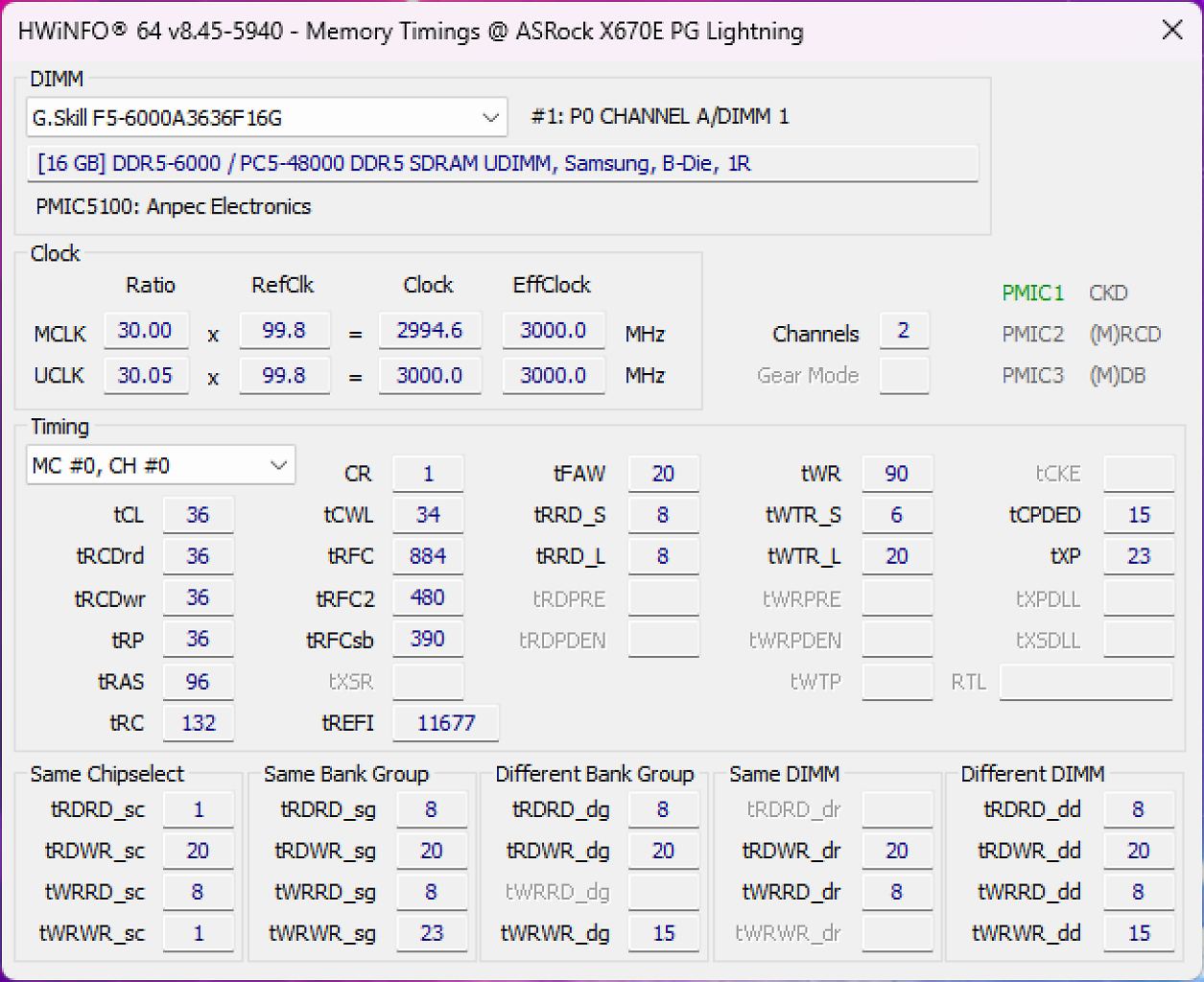
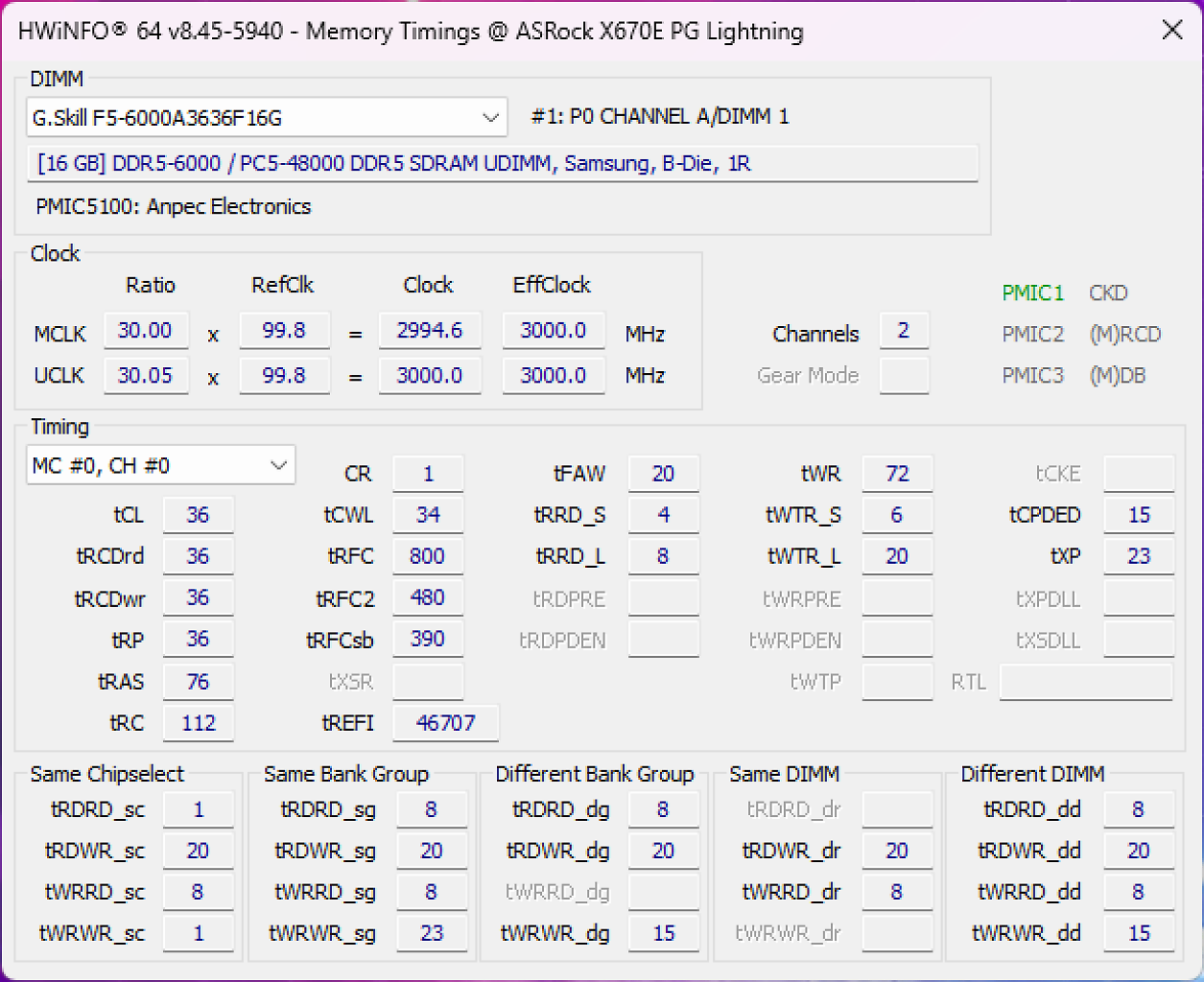
The first kit belongs to G.Skill's Trident Z5 NeoX series and is rated for DDR5-6000 with primary timings of CL36-36-36-76. It uses single-rank Samsung B-die ICs. At the time of writing, the kit was listed as in stock at Alternate for 589 euros. As the comparison above shows, the modules contain two EXPO profiles, one of which uses the extended ULL timings. In practice, however, only five timings are further optimized: tRAS, tRFC, tREFI, tRRD_S, and tWR. Our own tuning articles have shown that tRFC and tREFI in particular can affect gaming performance.
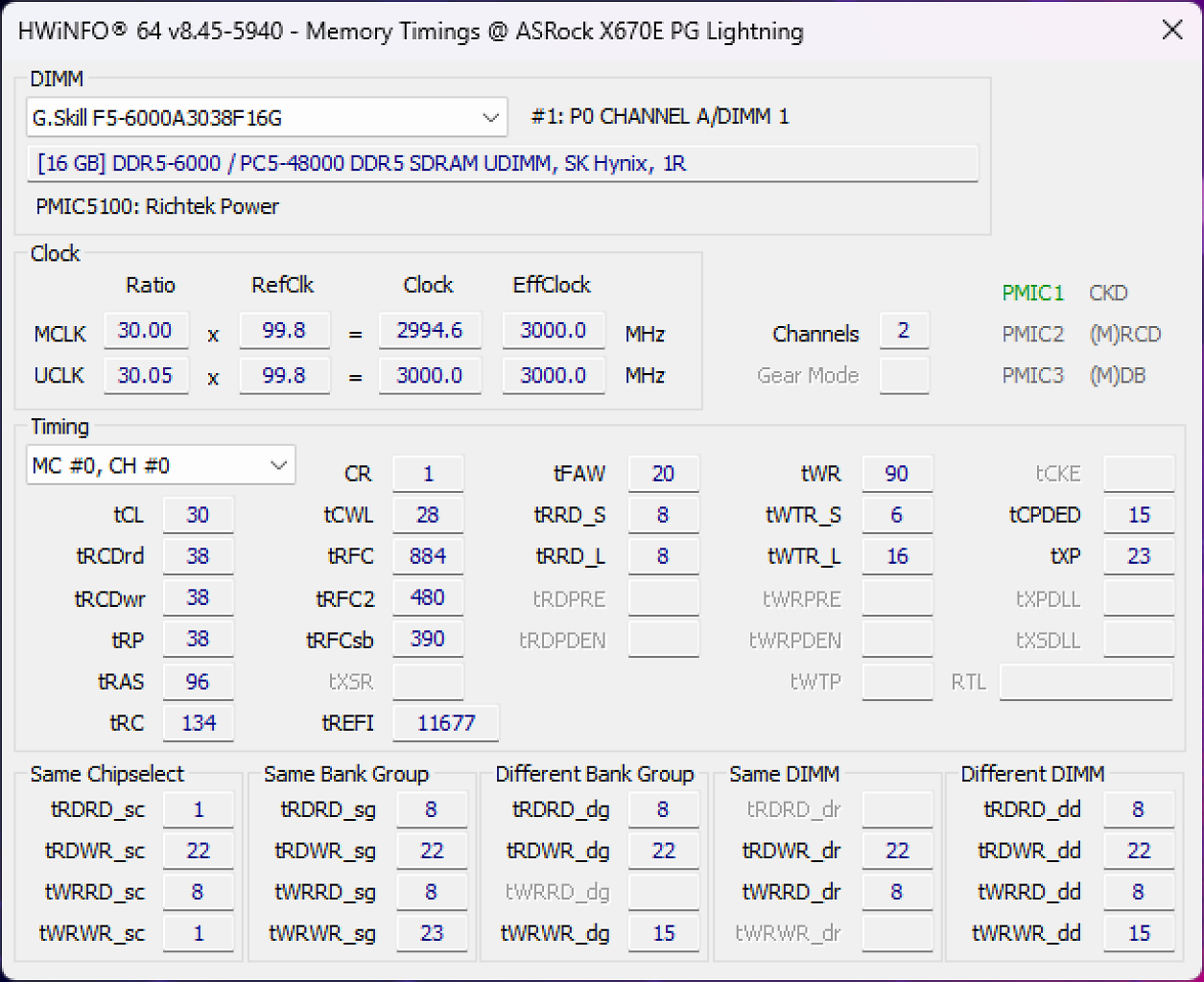
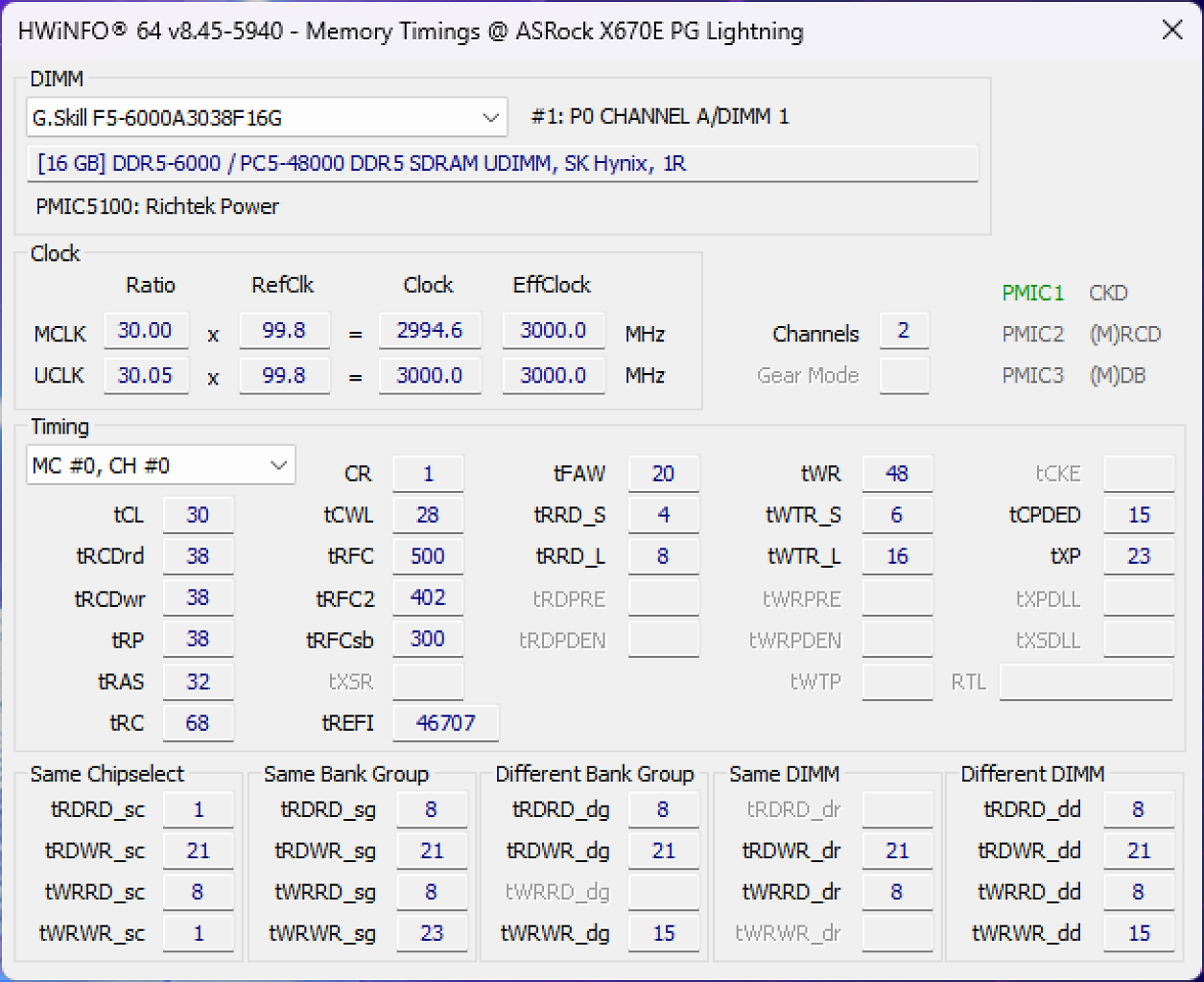
The second kit also belongs to G.Skill's Trident Z5 NeoX series, but costs considerably more at 708 euros from Alternate. It is rated for DDR5-6000 at CL30-38-38-32 and uses single-rank SK Hynix M-die ICs. Compared with the Samsung ICs, these chips support significantly tighter timings, and G.Skill makes use of that potential in the ULL profile. tRAS and tRC are reduced substantially from 96 and 134 to 32 and 68. With ULL enabled, tRFC and tREFI also approach the ranges that enthusiast tuners typically target with these ICs to improve performance. tRRD_S and tWR are optimized as well. In total, seven timings are tightened, in some cases considerably.
On the following page, we examine the comparison modules and present numerous benchmarks conducted with an AMD Ryzen 5 9600X. The tests will show whether AMD's claimed figures hold up and what role EXPO ULL plays in everyday gaming. Is the difference measurable?