DLSS 5 in detail: Three AI models on one Geforce graphics card
Special Add as a preferred source on Google
Nvidia has explained DLSS 5 in detail for the first time at SIGGRAPH 2026: three AI models, masks for individual objects and operation on a single graphics card are all confirmed. Geforce RTX 5000 owners are set to gain access in the autumn.
Under the title "Next Era of Graphics: Neural Rendering, World Models & Simulation", Nvidia used its research keynote at SIGGRAPH 2026 in Los Angeles to provide the first detailed technical breakdown of the technology announced in March this year. The US company offered an extensive look at what players can expect from this autumn.
A complete reinvention of computer graphics is taking place.
— Jensen Huang, Nvidia-CEO
Lead developer Edward Liu had already outlined the basic concept behind DLSS 5 ahead of the conference, while Neural Rendering first appeared in the graphics driver in May. Nvidia has now provided specific details about the model, its tools and the required hardware. The keynote also answered how much control developers will retain and whether a single Geforce graphics card will be sufficient.
Neural Rendering in games: How DLSS 5 works in detail
The presentation focused on three areas: the architecture of the AI model, the control tools available to developers and the hardware requirements. The details were presented by Edward Liu, Director of Applied Deep Learning Research, and Gabriele Leone, who leads Nvidia's team of technical artists and art directors.
According to Nvidia, DLSS 5 must overcome three challenges: preserving artistic intent, maintaining stability from one frame to the next and delivering the highest possible performance with real-time graphics at 4K/UHD.
One-step diffusion: How the DLSS 5 AI model processes images
DLSS 5 is based on a compact, one-step pixel-space diffusion transformer distilled from substantially larger foundation models. It processes each image causally according to the principle of "one frame in, one frame out". The new model does not look ahead to future frames, but instead enhances each rendered image individually in real time.
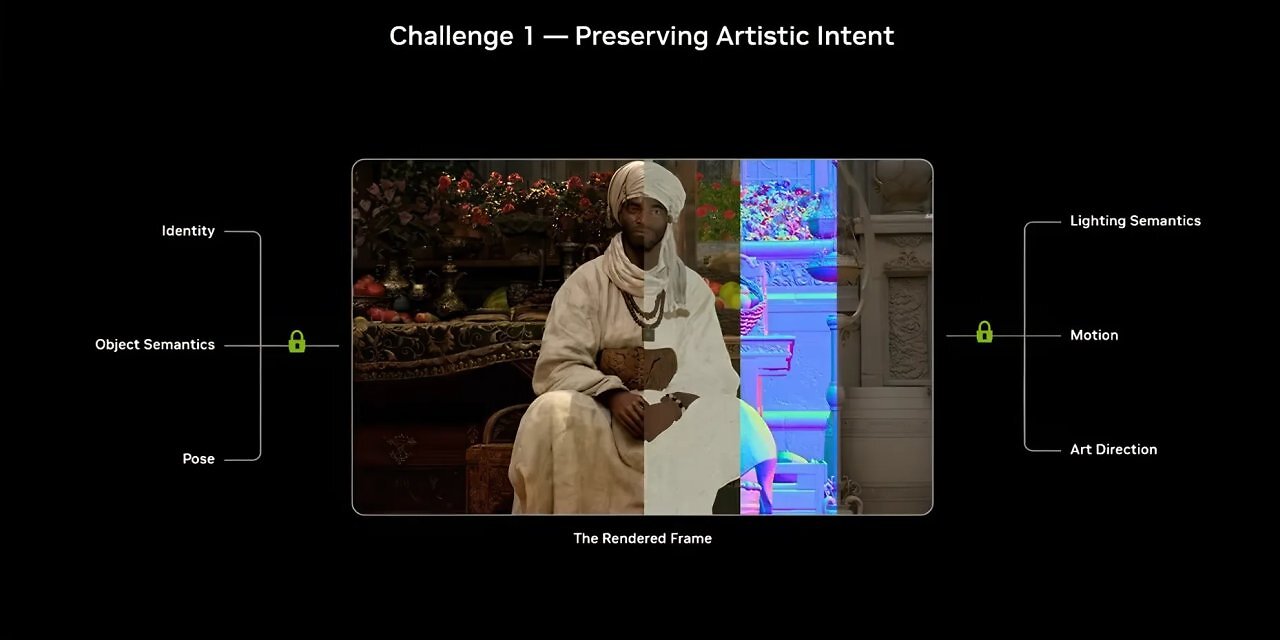
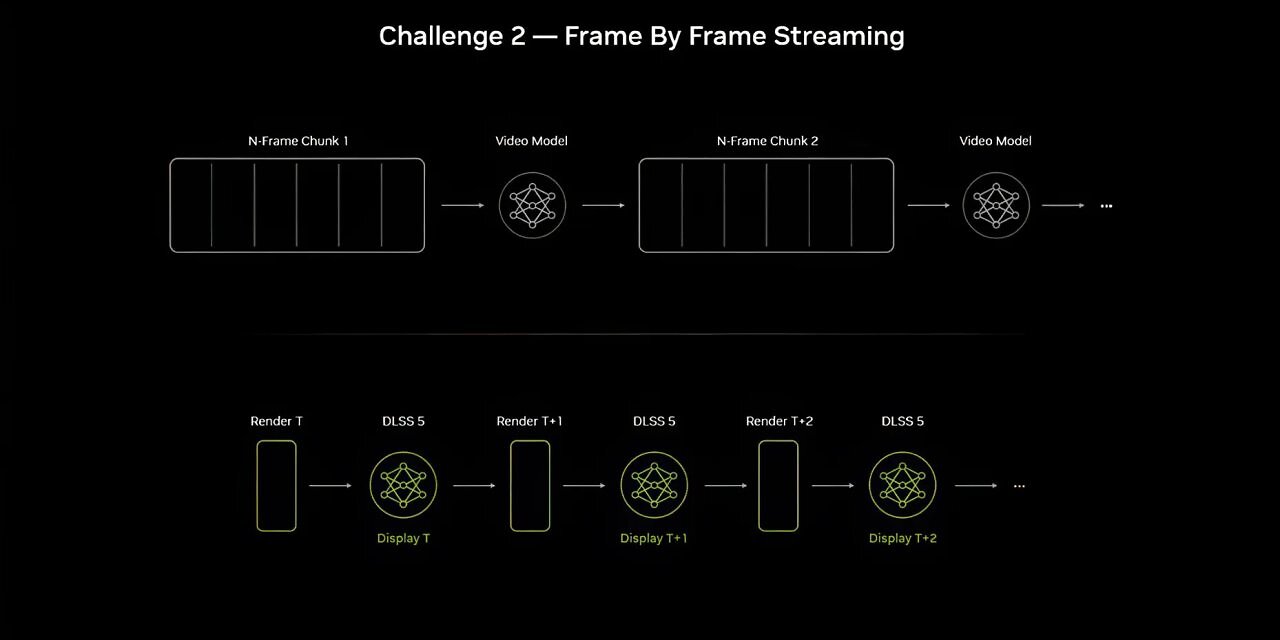
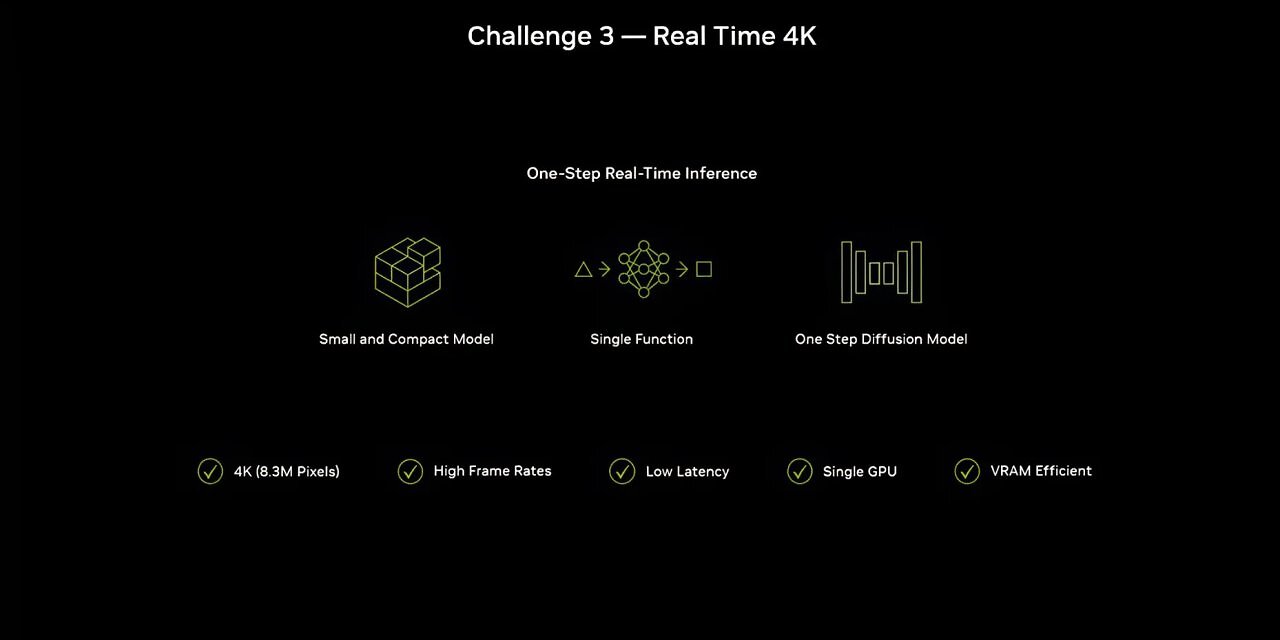
Its inputs include the colour buffer and the engine's motion vectors, keeping the output anchored to the original 3D content. According to Edward Liu, DLSS 5 does not alter the geometry of a scene. Instead, the technology enhances contrast, ambient occlusion, contact shadows, reflections and subsurface scattering at 4K/UHD ("2160p") and in real time.
Three AI models and object masks for developers
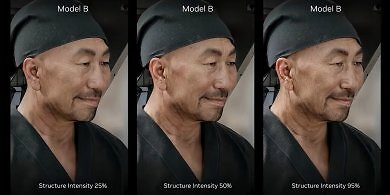
DLSS 5 allows developers to choose between three AI models and switch between them for individual scenes or cutscenes. It also provides "Structure Intensity" and "Tone Intensity" controls, along with masks that can limit the effect to individual characters, objects or environmental details.
Generative models can produce remarkably photorealistic images. But a game needs more than a beautiful image. Every single frame must remain consistent with the game world created by the developers. — Edward Liu, Nvidia
Gabriele Leone demonstrated the tools using several game characters, which appeared visibly more realistic than the underlying rendered versions thanks to higher-contrast lighting and more detailed contact shadows.
 Source: Nvidia
 Source: Nvidia
The presentation itself was also notable. Rather than replaying the controversial comparison video from GTC, Nvidia showed a clip lasting just under 30 seconds and demonstrated live how precisely the AI effect can be controlled.
The response to the backlash in March is unmistakable. At the time, the "AI faces" produced through Neural Rendering sparked a heated debate about artistic control. Integration into games will continue to use the established Streamline SDK.
DLSS 5 launches for Geforce RTX 5000 in the autumn
DLSS 5 is due to launch in autumn 2026 and is expected to require only one graphics card at release. The first GTC demonstration still ran on two Geforce RTX 5090 cards, one of which was dedicated entirely to processing the AI model. By launch, however, Nvidia intends to have optimised the technology for operation on a single graphics card.
The manufacturer has yet to provide specific system requirements or performance figures. The Geforce RTX 5000 series ("Blackwell") is currently regarded as the baseline. The first supported titles will include Starfield, Assassin's Creed Shadows, Hogwarts Legacy and The Elder Scrolls IV: Oblivion Remastered. Publishers including Bethesda, Capcom and Ubisoft have already pledged their support. The full research session is listed in the SIGGRAPH 2026 keynote programme.
Quelle: Nvidia