Steam Machine: Hardly any cheaper gaming PCs - Valve in interview
Valve talks to us about the high price of the Steam Machine, its target audience and open issues with SteamOS. The discussion also covers Windows, anti-cheat and 8 GiByte of VRAM.
Special Add as a preferred source on Google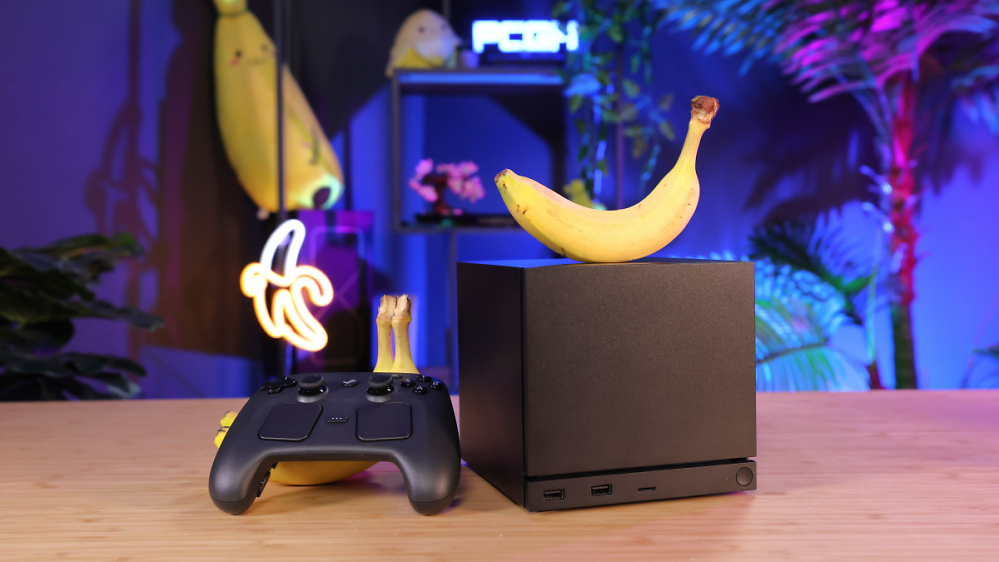
Recently, PCGH and PC Games had the opportunity to speak with Valve's Lawrence Yang and Yazan Aldehayyat for about half an hour. Yang works on UX and product design for Steam and Steam Deck at Valve, while Aldehayyat is a hardware engineer at the company. The conversation focused on the new Steam Machine, which Valve positions as a compact SteamOS PC between a traditional gaming desktop and a living-room device. Following our test, we do not want to withhold Valve's answers any longer. Topics included price, target audience, dual boot, anti-cheat and the decision to use 8 GB of graphics memory.
PC Games: The price of the Steam Machine is higher than many had hoped. How did that happen?
Yazan Aldehayyat: Obviously, when we first started working on the Steam Machine, we were hoping that it would be priced more aggressively and make it more accessible to people with a lower price point, or to people who are more price-sensitive.
That was really a big focus throughout the design process. Our decisions around performance, form factor and feature set were all in line with trying to achieve a very aggressive price.
But, to be honest, we were expecting there to be some memory and storage supply challenges, but we really did not expect it to be as severe as it has been. I think the magnitude of the price increases on those parts far exceeded anything we expected.
I don't know if you saw the Steam Deck price increases, but I think that is probably a good baseline for what kind of increase in our costs there has been. If anything, the Steam Machine has more memory, so it is probably more impacted.
As I said before, we were aware of this issue early on. So we had target prices, but they were never official prices. It is really hard to talk about exactly how much of that, but it is definitely a significant amount, in line with what you saw with the Steam Deck pricing.
PC Games: And then personally for you: Are you disappointed in how the market has evolved in the last two years, and how that impacts you directly as engineers and designers?
Yazan Aldehayyat: I mean, we're disappointed in the sense that we want our hardware to be accessible to people, right? We want as many people to be able to afford it as possible, because that's kind of our goal, right?
The goal is to make as many people as happy as possible. We want, as people and as engineers, to make as many people as happy as possible and get this device into as many people as we can. And we know that at this price point, unfortunately, some people are priced out, and we're disappointed by that. We would have much preferred if the price point was lower and more people were able to buy it.
So we're disappointed from that perspective. But at the same time, just like Lawrence mentioned, we still think the value of the Steam Machine is there. If you're somebody looking to buy a gaming PC, we think it compares very favorably on price and feature set and quality and performance. If you're looking in the market for a gaming PC, I think it compares really favorably.
Obviously, if you just don't have the budget for it, you don't have the budget for any real gaming PC at that point. So yeah, we're disappointed that it's not more affordable, more approachable, more accessible. But we're still proud of what we were able to achieve in terms of quality and performance. And even at this price point, we still think it's actually really aggressive relative to what else you can buy.
Steam Machine
PC Games: And just for the sake of it: What happens if prices suddenly go down in one or two years? Do you see that as an option, to say, okay, we can actually lower the prices for both Steam Deck and Steam Machine? Or is that pretty much set in stone right now?
Lawrence Yang: I think we'll always look at what we can make more accessible to customers. I think that our goal with hardware is to make games more fun, to let people have more ways to play their Steam games. It's not to make a huge profit. If there's a whole bunch of margin, we want to be able to somehow give that back to them.
PC Games: When we compare this to the sales numbers of Steam Deck, even after the price increase, as far as I know, the Steam Deck is pretty much selling out constantly. You're always shipping new units. Did you see an impact in sales numbers? Or did consumers react to the price increase?
The demand is still strong. I think it's a little too early to make comparisons, because we were out of stock for a while. So there's a lot of pent-up demand. But the demand we're seeing is really strong. We'll have to wait more time to see the actual magnitude.
Obviously, supply and demand is a reality, right? So the higher the price, the less likely it is to sell. But we're not seeing that right now just because of the pent-up demand from being out of stock for so long. So it'll take time for us to understand what the impact was.
PC Games: Perhaps some people would actually like to use the Steam Machine as their main computer. That brings up the question, among other reasons: Is there a plan or a way to set up the unit as a dual-boot device, so you can have the benefits from both Windows and SteamOS?
Lawrence Yang: We don't have that functionality built into SteamOS right now. It is something that's been on our list, along with a long line of other things, like making just the installation of SteamOS on arbitrary hardware easier. But we do know that customers really do want dual booting. We've seen community solutions out there for people who have done that, and we think that's great.
It is a PC, so we want people to be able to do what they want with it. You can dual boot using external media. I think the biggest challenge right now with the limitations is that you can't have two OSes on the same drive. But you could always, for example, have a Windows boot stick or a Windows boot hard drive plugged into the USB ports, and you can boot from that.
PC Games: Yeah, I've seen on Steam Deck people have booted from the SD card, like Windows.
Yazan Aldehayyat: Yeah, and SD cards on the Steam Deck, that was possible. Obviously, SD cards are really slow for OSes. On a Steam Machine, a USB 3 hard drive nowadays, especially Gen 2, can be very fast. So if you'd like to dual boot on a Steam Machine, I think right now that's probably the best option.
Trying to boot from the same SSD is just difficult. There's a bunch of technical limitations on that. Nothing's stopping you from dual booting if you just go through an external hard drive.
 Source: PC Games Hardware
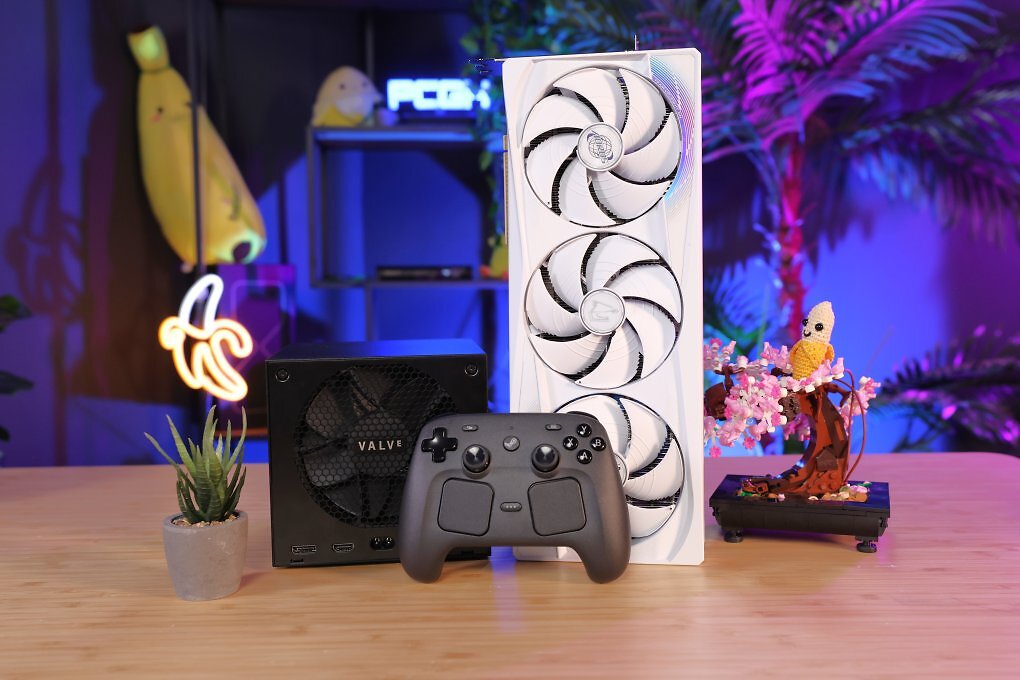
Steam Machine vs. RTX 5090
PC Games: When I was telling my co-workers that I was actually able to talk to you guys, pretty much all of them came flying: You have to ask them about Easy Anti-Cheat. Is there any way to make anti-cheat methods available on the Steam Machine? Do you have anything to say on that front?
Source: PC Games Hardware
Steam Machine vs. RTX 5090
PC Games: When I was telling my co-workers that I was actually able to talk to you guys, pretty much all of them came flying: You have to ask them about Easy Anti-Cheat. Is there any way to make anti-cheat methods available on the Steam Machine? Do you have anything to say on that front?
Lawrence Yang: We're constantly working on it. We've been working with all of the main companies, with Easy Anti-Cheat and BattlEye. There are solutions for developers who wish to implement it on Linux, and it really is up to the developer to turn that on.
So there are solutions out there. It's a little more challenging with things like kernel level, especially with Linux, but it's something that we continue to look at. We know there's a lot of games that people would like to play on Steam Deck and on Steam Machine.
PCGH: In our measurements, 8 GB of VRAM quickly become insufficient at high presets, even sometimes at medium presets. Is that a bug? Is that something you actually work on? And why did you decide to put 8 GB of graphics memory in the Steam Machine? Because of the prices at the moment?
Yazan Aldehayyat: The decision to put 8 GB of VRAM in the Steam Machine happened actually really early on, way before anybody was talking about memory shortages. And as I said before, we really wanted the Steam Machine to be very aggressively priced, very accessible to people. And so we wanted to make it cost-competitive, and so we picked 8 GB for that reason.
But also because we believe 8 GB is sufficient for 1080p render resolution, high or medium settings, for most games. Now obviously, in hindsight, we think that decision ended up being really important. I'm glad we did not do more than 8 GB, because we would be in a much worse position than we are now.
But to kind of reach your point, you're right: At high presets, you will be able to run out of VRAM. But I think, realistically speaking, for the performance level that the GPU and CPU offer on the Steam Machine, you probably don't want to be at those settings. You probably want to be at the 1080p render resolution, or 1440p render resolution. And then you have to rely on upscaling technology to get to 4K.
 Source: PC Games Hardware
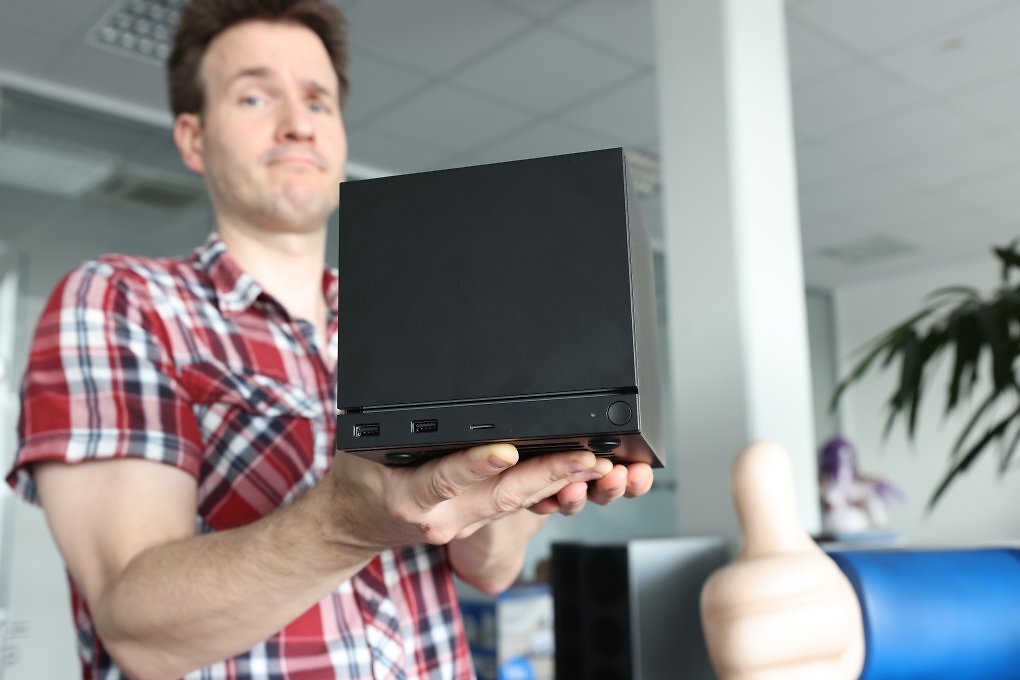
Raff takes a critical view of the 8 GiByte of VRAM.
Having said that, we are working on improving VRAM management and our VRAM manager. So one of the things that we haven't listed yet, but that is coming soon, is that we are going to be more aggressive in terms of evicting any non-game data from VRAM.
Source: PC Games Hardware
Raff takes a critical view of the 8 GiByte of VRAM.
Having said that, we are working on improving VRAM management and our VRAM manager. So one of the things that we haven't listed yet, but that is coming soon, is that we are going to be more aggressive in terms of evicting any non-game data from VRAM.
Even the Steam overlay data, for example, will now live in system RAM, not VRAM. So, for example, if you play a game and you launch the overlay, you might see it stutter a little bit. And that's because now we want it to be in system RAM, not VRAM, which is really the reason why VRAM is available to you.
We're also going to do more work in terms of being more graceful in handling cases where the system is out of VRAM. So basically, being able to shuffle data back and forth between VRAM and system RAM, et cetera. Obviously, there's a performance impact to that, but at least you won't have instability repercussions.
Lawrence Yang: Some of those updates have already shipped. In a beta a few days ago, we updated the latest SteamOS beta with some of those VRAM improvements so that more memory is available. I would check again if you haven't updated in the last couple of days.
In addition, there's an upcoming update to ray tracing that will improve performance. And we can say that we've been working with AMD to officially support FSR 4 on Steam Machine, and that will significantly improve the upscaler's graphical fidelity. We can't say anything about dates right now.
PC Games: Is there already a Verified program for Steam Deck? Will users see similar information for Steam Machine games on the store page, or how will Valve handle that?
Lawrence Yang: Yeah, we will have a Steam Machine Verified program as well, similar to Steam Deck. So when you're on a Steam Machine and you go to the store, you'll see a green check for games that are verified on Steam Machine.
What's nice is, in many respects, Steam Machine is just a much more powerful Steam Deck with fewer constraints. So we are able to use a lot of the same test data. There are some cases where we will do additional testing for Steam Machine. But for instance, what we've been telling our partners, our developers, is that if you are Deck Verified, then you are Machine Verified.
In many cases, they'll just play way better on Steam Machine because of the extra performance. In some cases where a game is not Deck Verified because of performance reasons, we will retest on Steam Machine. And by and large, they have resolved it on Steam Machine because of the extra performance.
So we'll be shipping that alongside Steam Machine when it's out. We already have documentation available for our partners, where you can see what the criteria are. But it's very, very simple.
PC Games: Another small question about the refurbished units you were selling for Steam Deck. I see they're all sold out right now, but do you have a similar process in place, or will you have a similar process in case that comes up?
Lawrence Yang: Yeah, I think a lot of our philosophy around this hardware is: The more use and value that we can get out of these for customers, the better. So there will be a refurb and RMA process. We will be working with iFixit for people who want to service the Machine, too. So all of that stuff is involved.
 Source: PC Games Hardware
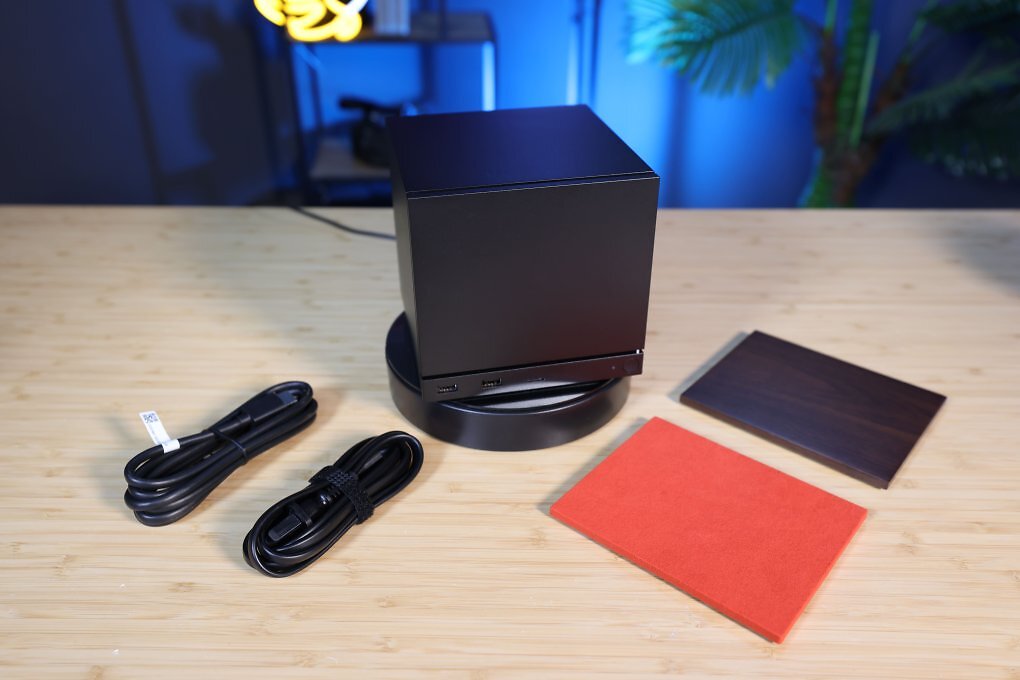
The Steam Machine is available with three different front panels.
PCGH: Are there performance differences between Gaming Mode and Desktop Mode? We tested exclusively in Desktop Mode.
Source: PC Games Hardware
The Steam Machine is available with three different front panels.
PCGH: Are there performance differences between Gaming Mode and Desktop Mode? We tested exclusively in Desktop Mode.
Yazan Aldehayyat: There are sometimes. It shouldn't be huge, but you will probably get more FPS. It is not 100 percent equivalent. It should be equivalent. There have definitely been cases where there are differences, especially around whether the game is windowed versus fullscreen, things like that.
I think we'll have to ask Pierre-Loup [Griffais] if he has specific examples of what that would look like. We do a lot of testing in Gaming Mode. But I'll have to get back to you with more detailed answers to what the differences are in that regard for gaming.
PCGH: And since you said the Steam Machine is for comfort and this kind of thing: Will the average player ever be forced to enter Desktop Mode, for example to install updates or anything like that?
Lawrence Yang: Our goal with SteamOS, ever since Steam Deck, part of the value proposition is: It's a PC without having to worry about all the fiddly things that come with a PC.
I don't have to worry about installing graphics drivers or going to a website and downloading an update. It's all built in. When there's an update, we let you know, and you just push one button, and it'll do it by itself.
We were mentioning to people, with all of our products, especially with things like Steam Deck and Steam Machine, they have constantly shipping features and updates. And we're seeing the community feedback. It's one of those things that just gets better.
PCGH: Who is the Steam Machine actually for? I am used to playing on a significantly more powerful PC, so I do not think the Steam Machine is intended for people like me.
Lawrence Yang: I think this is what we were mentioning. We think the Steam Machine is just one part of the PC ecosystem. If you're somebody who ... I think the market in some ways has catered to people who want higher performance for a while.
If you're somebody who's willing to pay more and you want more performance, there are actually a lot of options for you, especially at higher price points. But for the other end of the spectrum, where people are more price-sensitive and are okay with lower performance, we feel that in some ways there are fewer options for those people, especially pre-builds, in that sense.
And so that's part of why we picked this performance target, because we felt like it was an underserved part of the market. Even at the 1,050-dollar price point, I guess US, even at this price point, we still think it's one of the better offers.
For the entry-level, lower-performance tier, it's a little bit different. In some ways, pre-builds in that price range are rare and difficult, especially at this performance level. So that's part of what we designed.
 Source: PC Games Hardware
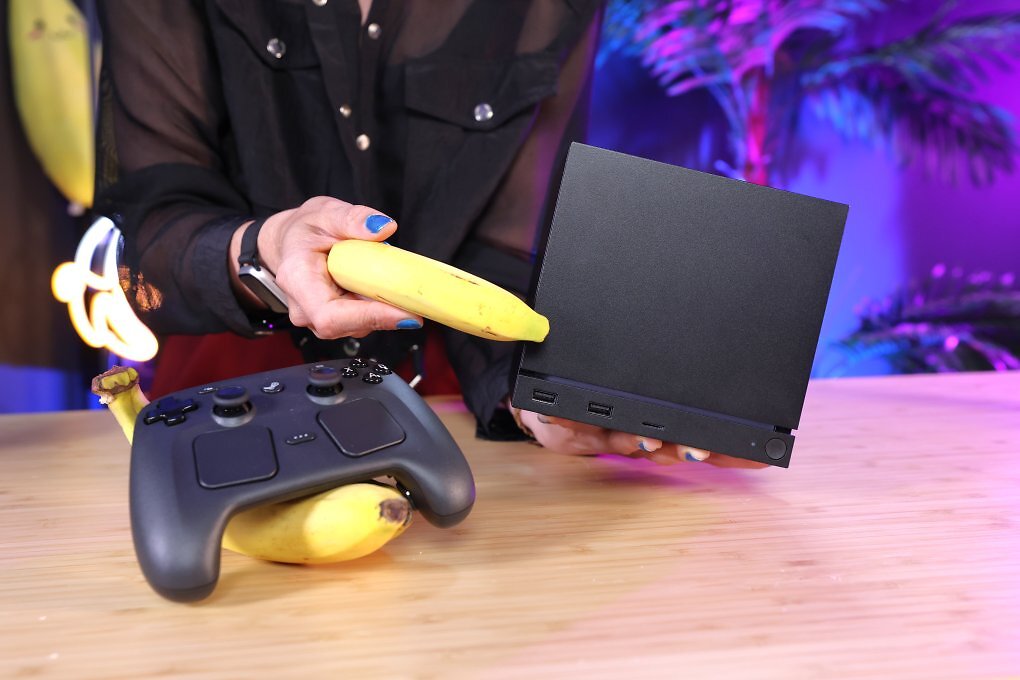
Banana for scale
PC Games: Looking at the Steam Hardware Survey, many users do not play on high-end systems or in 4K. Was this typical Steam usage one of the reasons behind the Steam Machine's specifications?
Source: PC Games Hardware
Banana for scale
PC Games: Looking at the Steam Hardware Survey, many users do not play on high-end systems or in 4K. Was this typical Steam usage one of the reasons behind the Steam Machine's specifications?
Lawrence Yang: I was just about to say: Your experience is the common Steam experience. Part of what went into picking the specs for Steam Machine was thinking about what our audience looks like, and how many people are actually using PCs that are more powerful or less powerful.
By and large, most people are using PCs that are less powerful than Steam Machine. So we do think that it will fit many users in that respect as well. I mean, obviously both ways are great. That's the cool thing about the PC ecosystem. You have options, right? If 4K, 60 or 120 is important to you, there are options. If you don't necessarily care about that, if you care more about a smaller, quieter and cheaper system, then you will find that with the Steam Machine. But we think it will serve the most people.